St Georges Mushrooms, Welwyn Garden City 11May2011


 Golden-ringed dragonfly Cordulegaster boltonii (top) and Common Darter Sympetrum striolatum (bottom), both seen at Ipley August 2010. The Golden-ringed female is the longest UK Dragonfly.
 A beautiful Emperor moth caterpillar we saw on the heathland near Ipley in the New Forest. Saturnia pavonia, feeds on heather and brambles.
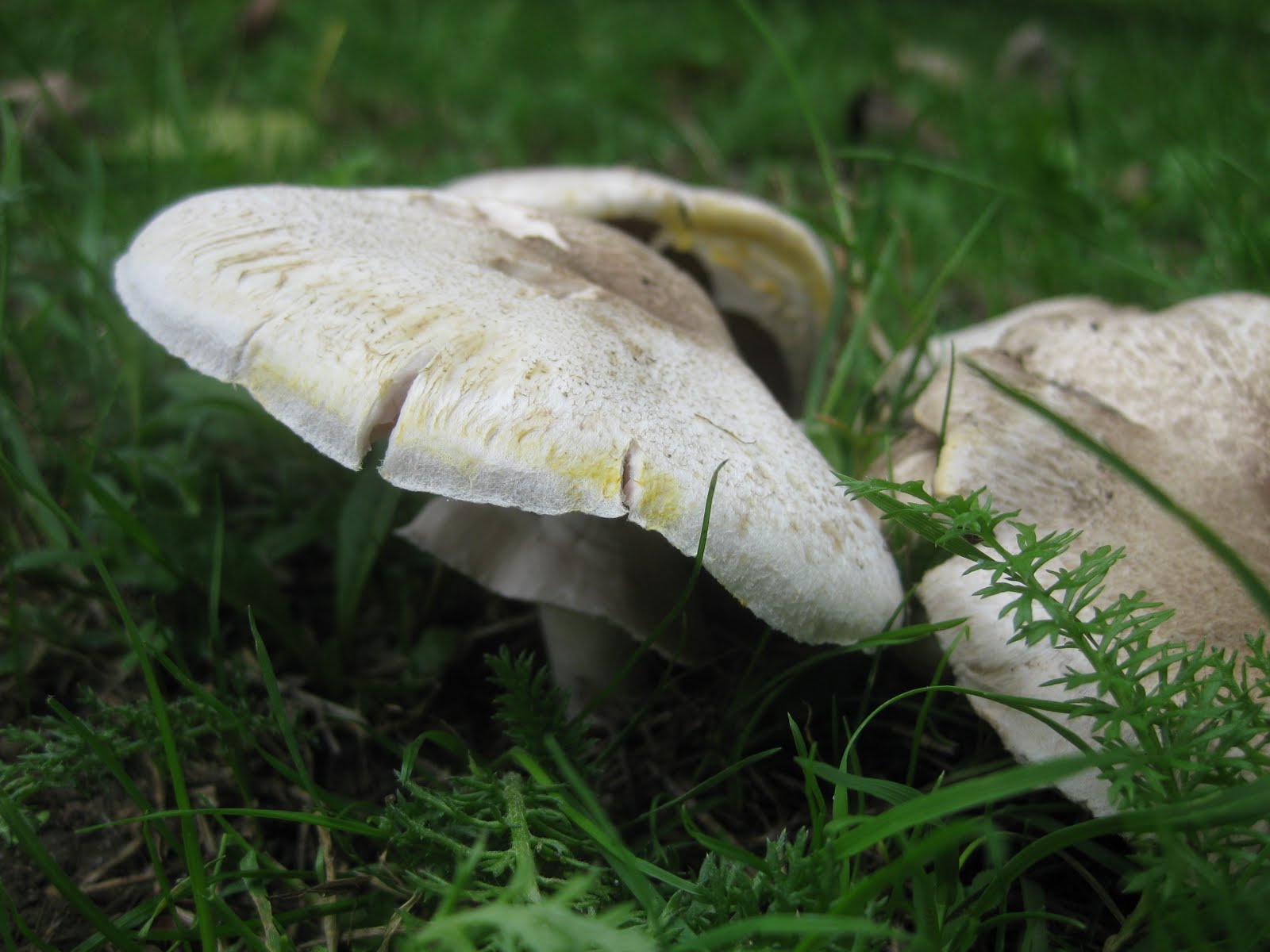 Agaricus xanthodermus (yellow stainer) looks a bit like a field mushroom or horse mushroom but, unlike the edible mushrooms about at the same time, this one bruises bright chrome-yellow, especially towards the margin (you can see this on the photo). Occasional, habitat in woods, meadows and gardens, season summer to autumn. Poisonous (the symptoms being sweating, flushing and severe stomach cramps, only some people are affected). Found on the grassy area between Caponfield and
  The gall wasp Andricus quercuscalicis is responsible for this gall which forms on the actual acorn. The growth appears as a mass of ridged plant tissue. When the growth is vigorous the gall can completely enclose the acorn and hide it from view. These photos were taken of the same patch of galls on 21 July and then 22 August.
 What a find! The first we found was a little way out from this hedgerow, a little small and not worth picking, but ever hopeful we looked about a bit more and spied this one nestling between the ripe brambles. Katie very proudly picked it and helped me make a big pot of wild mushroom soup.
 Chicken of the Woods - what a find just around the corner from home in Welwyn Garden City! I hve not eaten this mushroom since I was a kid so I was very excited to finally find a decent specimen which was fit for the kitchen!
 Katie and her Daddy checking out the lovely yellow Sulpur Polyphore on the trunk of a cherry tree.
 Now it is time for Mummy to make something yummy from our find...
 We found some fantastic tiny black wild cherries at Moneyhole Park in Welwyn Garden City, whilst we picked some to make jam Katie gorged herself on all those that she could reach! Looking rather like an extra from a vampire film here she is having a cuddle with her Uncle Mike...
 On the way back from the toddler club the other day we came across a maple tree covered in these fantastic galls, apparently called bladdergalls they are caused by microscopic eriophyid mites which apparently have only 2 pairs of legs. Katie was suitably excited because it looked like the tree was covered in pink "sprinkles".
Our tree bumblebees have gone thanks to Wax moths, Aphomia sociella. I was not sure what was going on having never seen inside a bumblebee nest, but the nest went very quiet in mid July and so Rupert had a peep, the lid of the nestbox was stuck down quite tight with silky threads and there were white grubs/caterpillars amongst the threads. One or two bees were still hanging around and Rupert is pretty sure that one squirted him with something in defence - enough to make him get down the ladder quick and not to want to return to take a photo! At first we thought they must be bee grubs, but knowing bees don’t make silk it seemed a bit odd… so a bit of a search and it seems that it must have been these moths, or their caterpillars at least. According to www.bumblebee.org in northern
 How excited were we to find out that our new neighbours in the next box on the west facing wall of our house are tree bumblebees Bombus hypnorum! These have only been in the UK since 2001. The Bumblebee Conservation Trust are tracking where they are nesting so we sent them some photos. They are most interested in their northerly spread though as some indication of climate change. We have another bumblebee nest high up on the house on the other side (East facing) not sure which species are in there yet but will keep looking!

 After seeing these berries on a lovely wintery snowy walk in December I got to wondering why it is that some holly bushes seem to be covered in berries and other seem to have few or none. On a bit of a research it seems that in the main trees or bushes are either male or female (except for one variety which is a self fertile female variety). Amusingly it seems that if you want a definate male or female holly sapling you need to go for the variagated varieties of which “Golden King” is a female plant and “Silver Queen” is a male plant! Now whoever thought of those names really does need shooting!
 I was excited and a bit worried to find this fungi on a trip to the New Forest in October. We were looking in Denny Woods hoping to find some interesting edible mushrooms and as I stood absent-mindedly picking the seeds from a grass I looked down to see funny black twiggy bits in my hand... looking down at the grass I realised that this was Ergot fungus - something that I had seen in Roger Phillips book but never in real life. I was a bit worried being pregnant and knowing how potent it was and was very glad to be able to wash my hands when I got back to the house!!
 Whilst out harvesting Rupert and Katie found this fantastic caterpillar on the raspberry canes at the bottom of our garden, this species seems to feed on all sorts of trees including plum trees which overhang our raspberry canes. It is a common caterpillar, and is a pest in some places, but we were excited to find it as not only is the caterpillar quite extrodinary, but when we looked it up it is one of those species where there is striking dimorphism. The orange-brown male flies mostly during the day, but the female is flightless, spending her brief life attached to her cocoon.
 On the 25th May we sat in Mum's garden in Dibden Purlieu, Hampshire watching simply hundreds of painted lady butterflies coming over the hedge flying North. We got lots of photos as they stopped to refuel in the flowerbeds. On having a bit of a hunt online we found that these butterflies, which use thistles as their food plant for their caterpillars, were coming in what could be the biggest influx of butterflies into this country in decades. According Natural England millions have flown into Britain from the deserts of north Africa. Up to 18,000 were spotted sailing on the breeze across Scolt Head Island on the north Norfolk coast: 50 arriving every minute. Apparently come September, the painted ladies will be off again: the British-born generation begin an epic reverse trip, drawn by a mysterious calling to the hot, distant land of their mothers and fathers.
 We saw this fabulous leucistic blackbird with white patches in May 2009 at the park on Noads Way in Dibden Purlieu near the New Forest. I had a bit of a read up on it:
  The first time I saw these fabulous green beetles was in the Brecon Beacons in July 2006, we saw one again in the New Forest in April 2009 and managed to get a photo this time. The Green Tiger Beetle, Cicindela campestris is the most common tiger beetle in Britain and it catches invertebrate prey in small pits it digs in the ground. It is found in moorland and heathland.
 Staying at Fregefond near Monteton in Aquitaine, France we saw lots of wildlife including lots of grasshoppers, spiders, lizards and butterflies. The best wildlife snaps we caught were these of a beautiful garden spider's web in a hedgerow, this lovely mantis and also this lovely green tree frog.

